
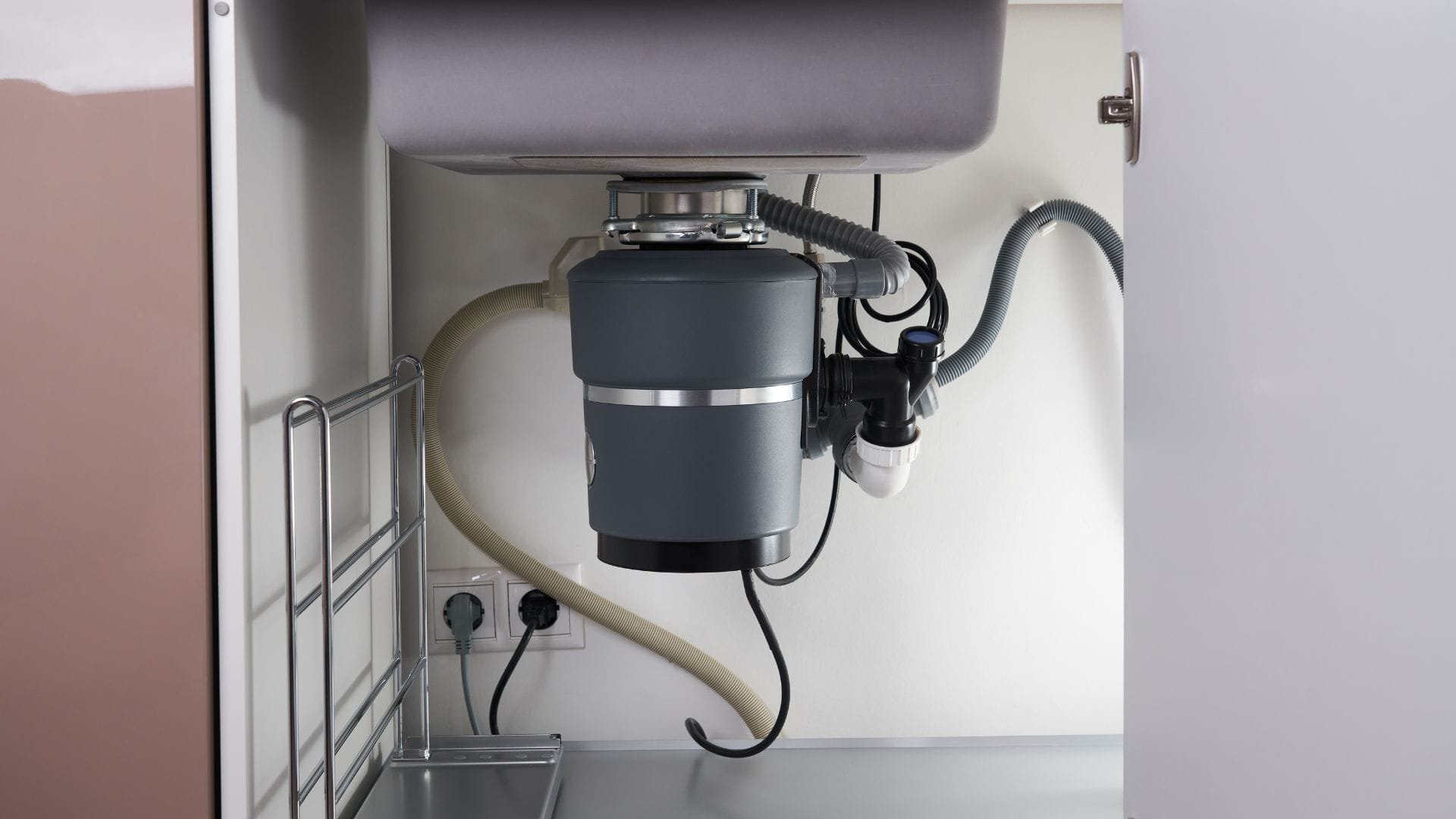
The Dos That Double Lifespan
A disposal is a grinder, not a trash chute — it excels at small food scraps swept along by plenty of water. Treat it that way and a quality unit runs a decade-plus without drama.
- Run cold water before, during, and 15 seconds after grinding
- Feed scraps gradually instead of packing the chamber
- Grind citrus peel occasionally — it cleans and deodorizes
- Run the unit regularly; idle disposals seize and corrode
- Cut large scraps down before they go in
The Don'ts That Kill Units
Every jammed or dead disposal we pull has a story, and it's usually one of these:
- Grease and oils — they coat the chamber and the drain beyond it
- Potato peels, celery, corn husks — fibrous wrap and starchy paste
- Coffee grounds — sediment that settles into clogs downstream
- Eggshells and bones — abrasive grit and outright jams
- Pasta and rice — they swell with water long after grinding
- Non-food items — twist ties, pits, and the mystery spoon
Jams: The Right Rescue
A humming, non-spinning disposal is jammed, not dead — but every second of humming cooks the motor. Kill the switch first. Most units accept a hex key in the bottom center to rotate the plate manually and free the jam; the red reset button underneath restores power after the thermal overload trips. Never put a hand in the chamber — tongs exist for exactly this.
If the jam repeats weekly or the reset button becomes routine, the bearings or motor are wearing out — that's the honest moment to price a replacement instead of nursing the decline.
Smells, Leaks, and Other Signals
Odor usually lives in the rubber splash guard and chamber walls — ice cubes with citrus peel scour it, and the guard itself scrubs clean or replaces cheaply. Leaks matter more: from the top ring it's the sink mount, from the side it's connections, from the bottom body it's internal seals — and bottom leaks mean the unit is finished. A disposal dripping from its belly goes on the replacement list, not the repair list.