
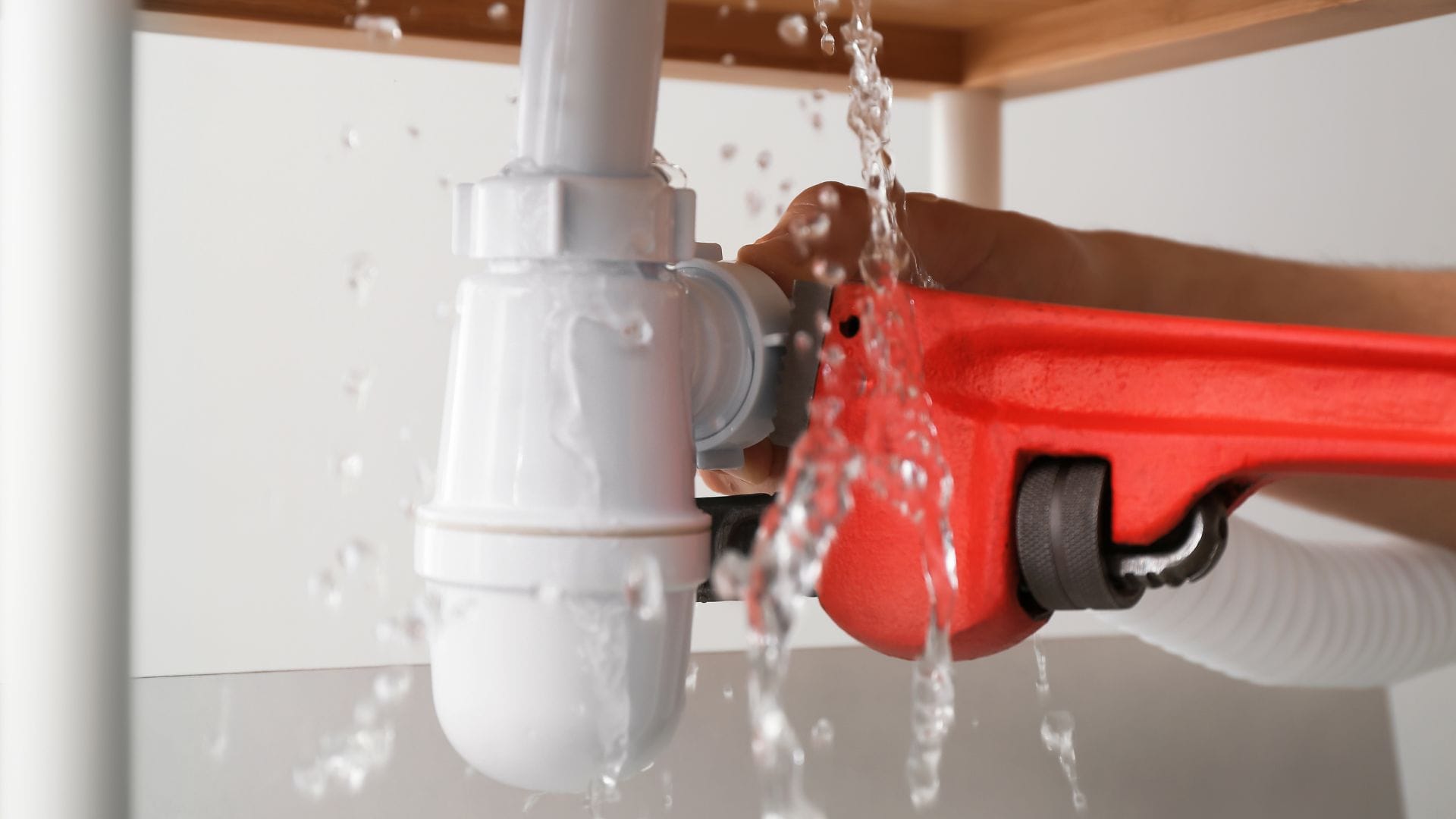
Step One: Kill the Water
Every emergency shrinks the moment water stops flowing. For a single fixture — toilet, sink, washer — close the small valve on its supply line. For anything bigger or unknown, go straight to the main shut-off: usually where the water line enters the basement or crawlspace, sometimes at the meter pit near the street. Turn it clockwise until it stops.
Then open the lowest faucet in the house to drain pressure from the lines. If you can't find or turn the main, call us anyway — walking people to their shut-off is something we do on the phone regularly, at every hour.
The First-Five-Minutes Checklist
With the water stopped, spend the next minutes on damage control:
- Kill electricity to any soaked areas at the breaker — water and outlets don't negotiate
- Move rugs, boxes, and furniture out of the water's path
- Towels and buckets at the spread edge buy real time
- For sewage backups: keep people and pets away — it's a health hazard, not a mess
- Photograph everything before cleanup — your insurance claim will thank you
- For a gas water heater misbehaving: close its gas valve; smell gas anywhere → leave and call the utility first
What Counts as 'Call Now' vs. 'Call Tomorrow'
Call the 24/7 line immediately for: burst or spraying pipes, sewage coming up drains, a flooding water heater, a dead sump pump with water rising, or total loss of water. These get worse by the minute and jump our queue any hour.
A drip contained by a bucket, one slow drain, or a running toilet can usually wait for a morning slot — and we'll say so honestly when you call, because charging emergency urgency for non-emergencies is exactly the habit we built this company against.
Before the Emergency: Two-Minute Prep
The best emergency move happens on a calm Saturday: find your main shut-off now, tag it, and make sure everyone in the house can turn it. Test it gently — a valve that hasn't moved in twenty years may need replacing before it's needed at 2am. Add our number to your phone, and Indiana winters argue for disconnecting hoses each fall so the hose bibs don't become February's burst pipe.