
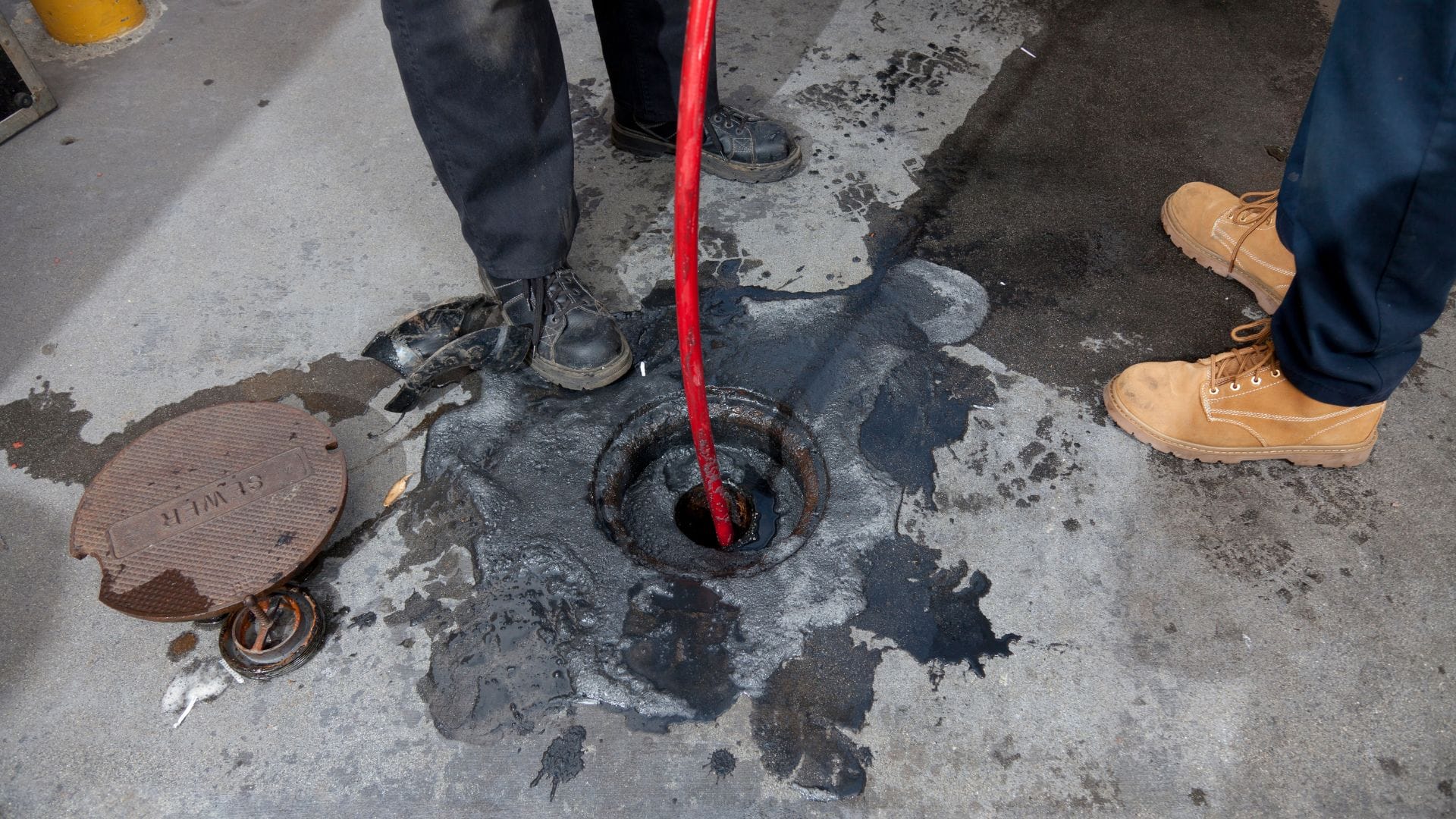
What a Snake Actually Does
A drain snake — a cable with a cutting or grabbing head — drills through the blockage and restores flow. It's fast, affordable, and exactly right for one-off clogs: a hair mat, a flushed toy, a wad of the wipes nobody admits to. The limitation is honest physics: the cable clears a channel roughly its own width, and whatever coats the pipe walls stays put.
What Jetting Does Differently
Hydro jetting sends water at thousands of PSI through a nozzle that scours the pipe walls in every direction while pulling itself up the line. Grease sheets off, scale breaks loose, root fuzz gets sliced and flushed — the debris exits to the main instead of waiting downstream. You end with clean pipe, not a tunnel through the problem.
- Grease-coated kitchen lines that reclog within months
- Sewer laterals with fine root intrusion at the joints
- Scale-narrowed older pipes with chronic slow flow
- Pre-liner or post-repair cleaning where walls must be bare
The Honest Decision Rule
First-time clog with an obvious cause? Snake it and save the money. Same line clogging on a schedule, or a camera showing coated walls? Jetting stops the subscription. We carry both on the trailer and quote both flat — and because we camera before jetting, you'll see exactly why we're recommending whichever we recommend.
One safety note: jetting pressure belongs in structurally sound pipe. A cracked or badly corroded line needs repair, not power — which the pre-jetting camera pass catches before any harm's done.