
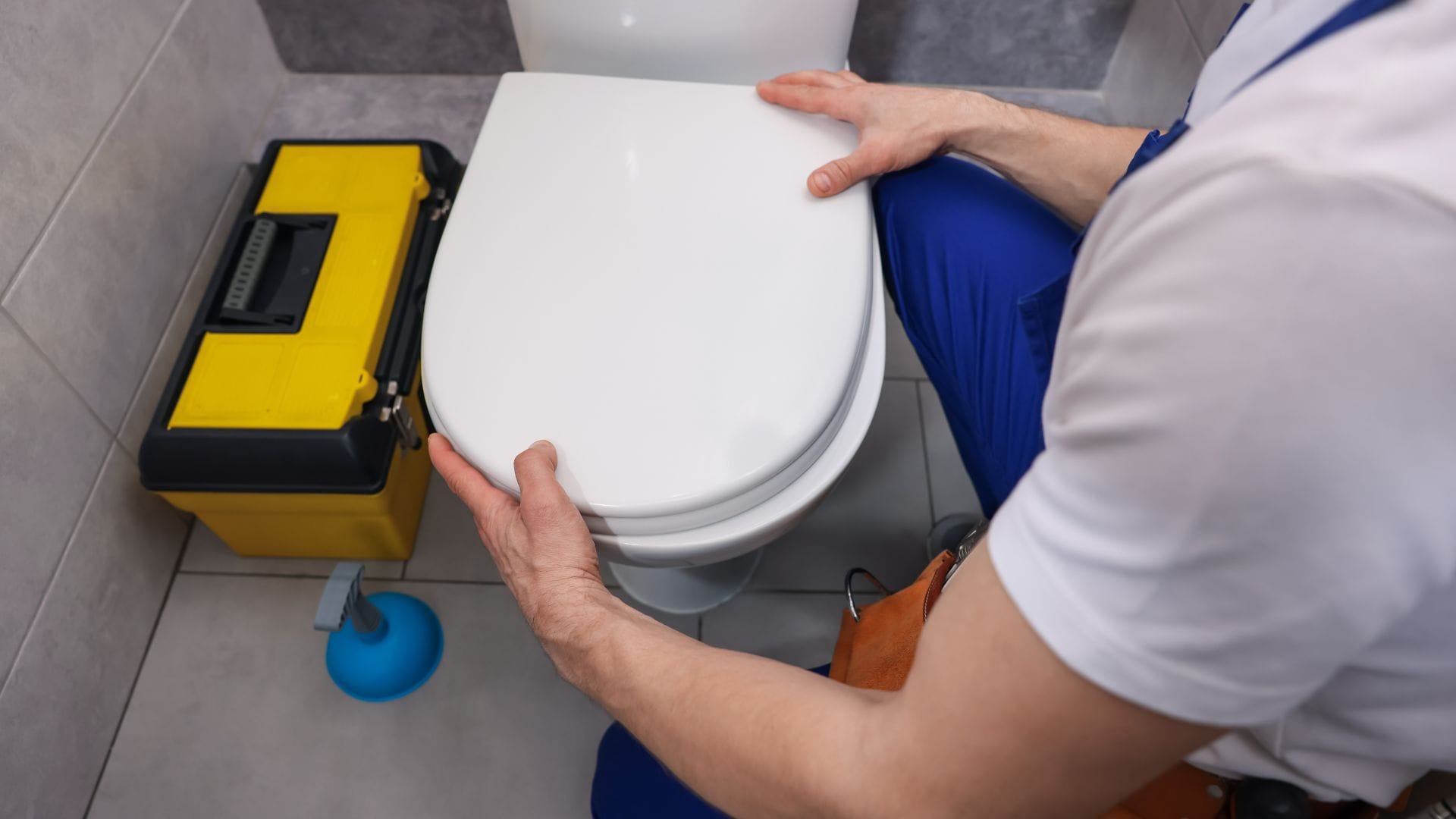
What 'Running' Actually Means
A toilet runs when water keeps moving after the flush should be finished — either leaking from tank to bowl past a worn flapper, or the fill valve failing to shut off. Both waste startling amounts: a moderate leak loses hundreds of gallons a day, which is why a running toilet is the most common 'mystery' behind a jumped water bill.
The Ten-Minute Diagnosis
Lift the tank lid and you can identify most causes yourself:
- Water trickling into the overflow tube → fill valve set too high or failing
- Flapper looks warped, stiff, or slimy → it's done sealing; replace it
- Chain too tight or tangled → flapper can't seat; adjust the slack
- Dye tablet in the tank colors the bowl unflushed → flapper leak confirmed
- Toilet refills briefly at random ('ghost flushing') → slow flapper leak
When DIY Is Reasonable — and When It Isn't
A flapper swap is honest DIY territory: a few dollars, no tools, ten minutes. Fill valves are a step up but manageable for the handy. Where we recommend calling: repeated fixes that don't hold (often a corroded flush valve seat that needs real parts), tanks with hairline cracks, anything involving the tank-to-bowl bolts on an older toilet, and hard-water homes where mineral crust has seized components together.
Around here that last one is common — our water's minerals stiffen flappers and scale valve seats years ahead of schedule. If your 'new flapper' failed within a year, the seat it presses against is probably the real problem.
The Replace-Instead Conversation
If your toilet predates 1994, it's flushing 3.5 gallons or more against a modern unit's 1.28 — and if it's also running, you're paying vintage prices for worse performance. A quality modern toilet often pays its own installation in water savings within a few years, flushes better, and ends the parts-replacement cycle entirely. We'll give you both numbers without a push either way.