
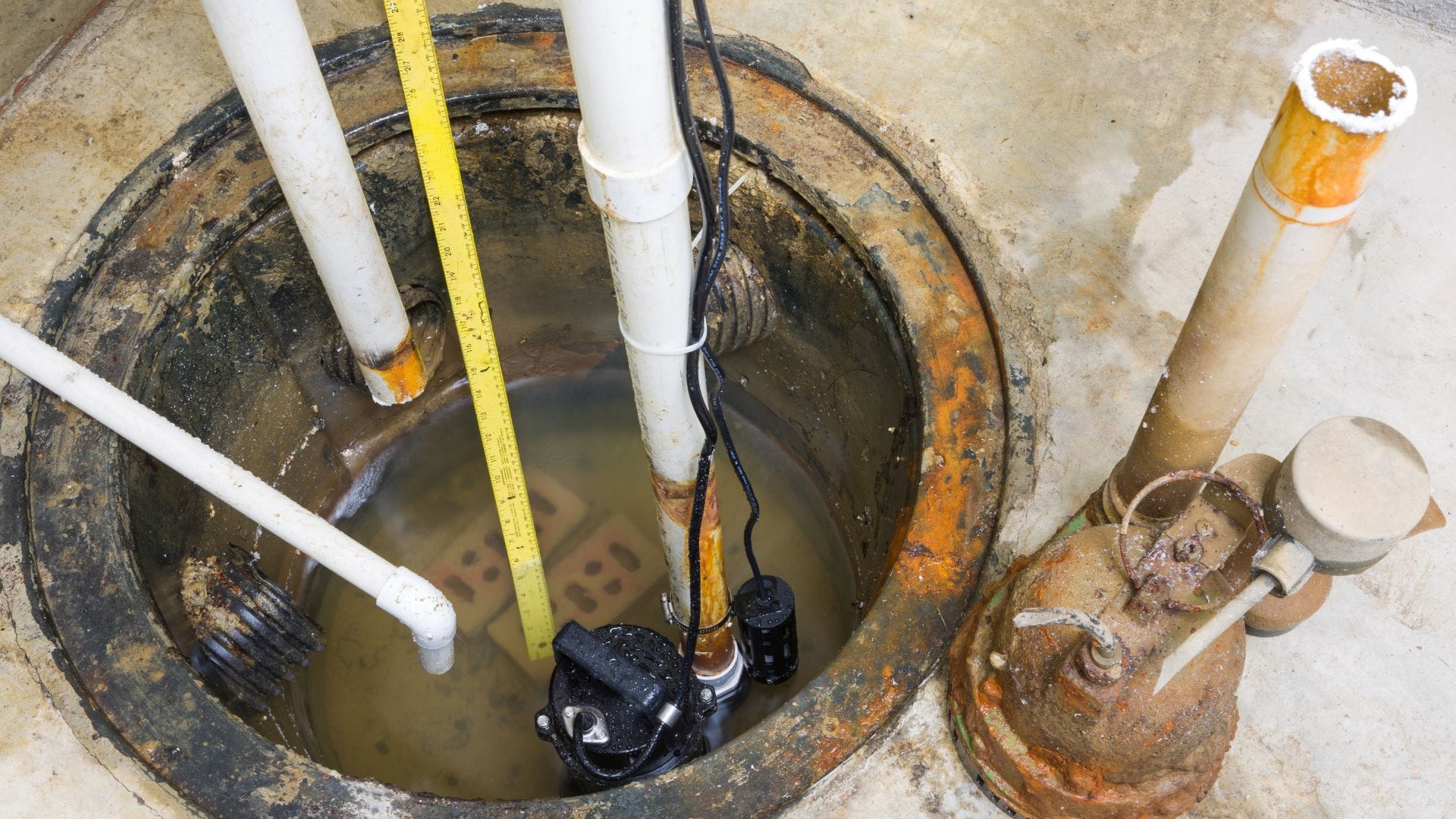
The Bucket Test — Twice a Year
Pour a five-gallon bucket of water into the pit and watch the full cycle: the float should rise smoothly, the pump kick on promptly, the water evacuate fast, and the pump shut off without stuttering. That sixty-second show tells you more than any spec sheet. Run it every March before storm season and every fall before the freeze.
While you're there, listen. Grinding suggests debris in the impeller; rattling points at worn bearings; rapid on-off cycling implicates the float or check valve. A pump that sounds different than last season is telling you something worth hearing.
The Five-Minute Visual Check
Between bucket tests, a quick look catches most developing problems:
- Float moves freely — not wedged against the pit wall or cords
- Pit is clear of gravel, silt, and debris that choke the intake
- Check valve is holding — pump isn't re-lifting the same water
- Discharge line outside is clear, unfrozen, and draining away from the house
- Power cord and outlet look sound; GFCI hasn't quietly tripped
Why Indiana Pumps Earn Their Keep
Our clay soil sheds rain toward foundations instead of absorbing it, and spring fronts stack storms back to back — pits refill as fast as pumps empty them. That workload is why the builder-grade pump in a 2000s subdivision is usually living on borrowed time by year ten. Replacing a tired pump on your schedule costs a fraction of discovering its retirement mid-downpour.
The Backup Question
The storms that flood pits are the storms that cut power — a primary-only system has a single point of failure exactly when stakes peak. If your basement is finished or stores anything irreplaceable, a battery backup (or water-powered backup, where pressure allows) turns a blackout from a crisis into a footnote. We size and install both, and we test them with real water like everything else.