
How Each One Actually Works
A tank heats 40–50 gallons and keeps it hot around the clock, whether you're home or not. A tankless unit ignites only when a tap opens, heating water as it flows past — endless supply, zero standby heating. That single difference drives almost every trade-off between them.
Where the Tank Still Wins
Tanks cost meaningfully less up front, install faster, and any competent plumber can service one. If your household is small, your gas line is modest, and the budget is tight this year, a well-installed Bradford White tank is an entirely respectable answer — we install them weekly and stand behind every one.
- Lower upfront cost, simpler installation
- No gas line upgrades needed in most homes
- Simple, widely understood service and parts
- Handles simultaneous small draws without sizing drama
Where Tankless Pulls Ahead
Tankless units sip gas — you stop paying to keep a tank hot all night — and they last roughly twice as long: 20 years with annual maintenance versus 8–12 for tanks here. Nobody runs out of hot water on shower morning, and the wall-mounted unit frees real floor space. Over the equipment's life, total cost usually favors tankless.
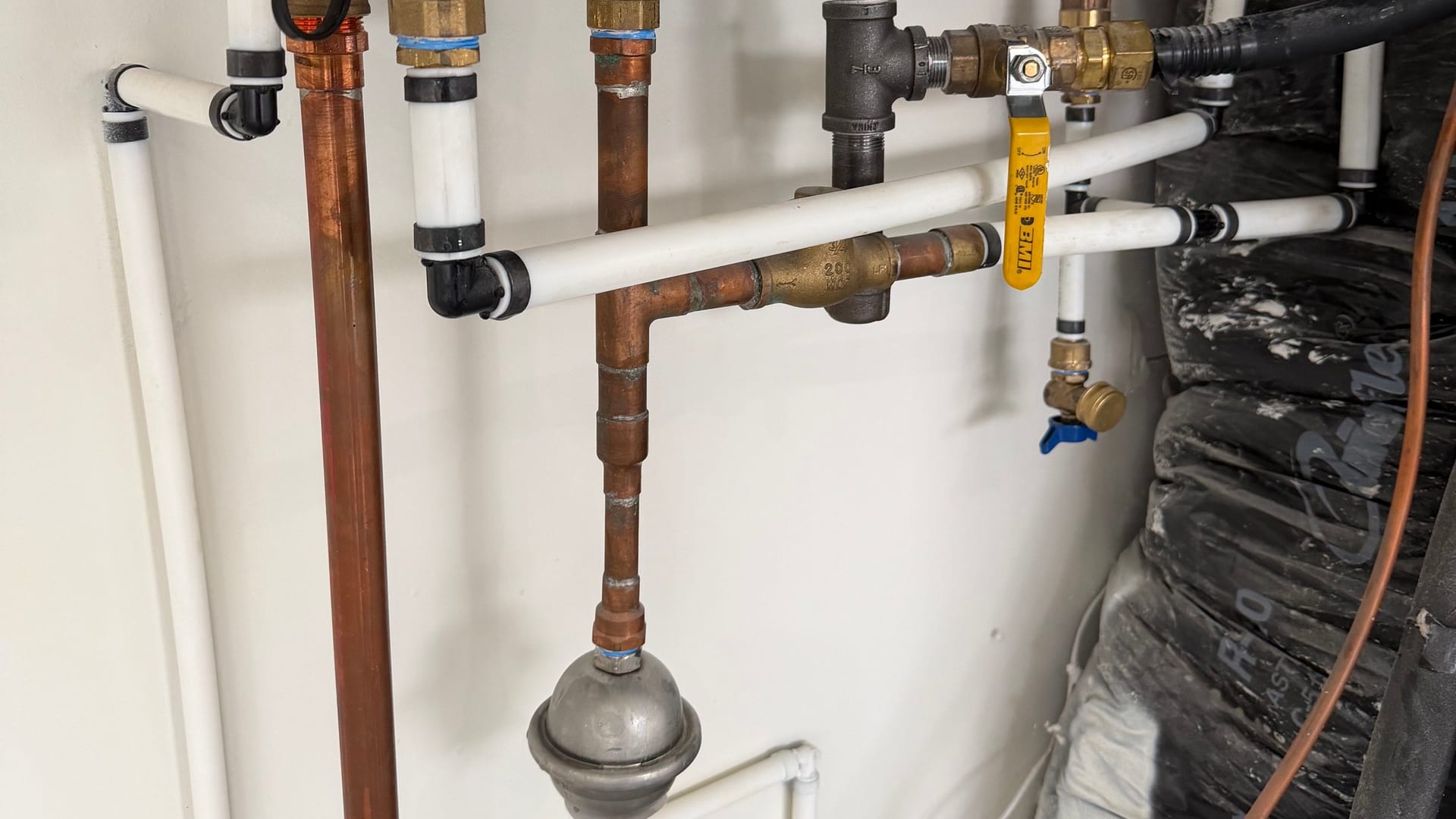
The catches: higher upfront cost, sometimes a gas line upgrade, and a genuine need for annual descaling in our hard-water area. Skip the maintenance and the heat exchanger scales up — which is why we install isolation valves on every unit and recommend a softener upstream.
Our Actual Recommendation Process
We count your fixtures, measure your gas capacity, ask how your family actually uses hot water, and run both numbers side by side. Big family fighting over showers in a home with good gas supply? Tankless earns its premium. Two people in a slab ranch replacing a dead tank on a budget? The tank might be the smart money. The house decides — we just do the math out loud.